$15.99
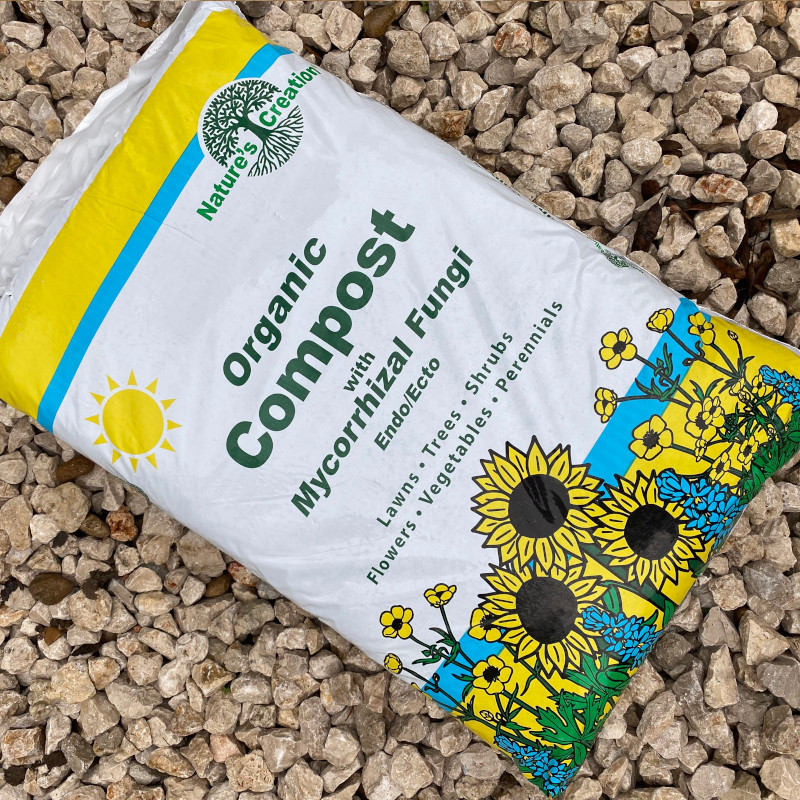
1.5 cubic foot bag.
- Made From Native Recycled Trees and Shrubs
- 100% Organic Material
- Retains Soil Moisture
- Contains Mycorrhizal Fungi
- Use Instead of Canadian Sphagnum Peat
- Does Not Compact
- Kid and Pet Friendly
In Nature, nothing is wasted. Leaves and limbs fall and plants die each season. All of this material becomes food for soil microorganisms that cause it to decompose. This is humus. It is not soil but a rich brown to black material formed as plant material breaks down into natural organic matter. It allows water and air to penetrate the soil surface and helps the top soil layer hold moisture. This organic matter is full of living organisms and humic acids that allow lawns and gardens to grow and thrive.
Nature’s Creation® Organic Compost with Mycorrhizal Fungi is made from Native Recycled Trees and Shrubs. They are ground and manure is added to hasten the natural conversion to humus. Composting is an aerobic method (meaning it requires the presence of air) of decomposing organic matter. During this process, heat is generated sterilizing the blend. No chemicals or other materials are added.
Use Nature’s Creation® Organic Compost with Mycorrhizal Fungi in fall and spring as a top dressing for the lawn, to enrich garden soil, to mulch around trees and shrubs, to loosen clay soils and improve moisture holding capacity of sandy soils. Nature’s Creation® Organic Compost with Mycorrhizal Fungi is the perfect replacement for Canadian sphagnum peat.
Benefits of Mycorrhizal Fungi
Mycorrhizal Fungi exist in symbiotic relationship with plant roots. Mycorrhizal literally means fungus root. Nature’s Creation® Organic Compost with Mycorrhizal Fungi contains 11 different strains of the genera Glomus, Rhizopogon, Pisolithus and Scleroderma. Mycorrhizae are divided into two basic classes, Endo and Ecto. The Endomycorrhizae actually penetrate roots to help capture nutrients and micronutrients from the soil. Ectomycorrhizae work mainly with woody plants forming what is commonly known as the Wood Wide Web. Both types benefit the host plants by increasing drought tolerance, water and nutrient uptake and disease resistance.
100 in stock