

Last week’s post was about getting down in the dirt with a magnifying glass and looking closely at pollinators and the plants they’re using. We marveled at just a few of the tiny interconnected systems that make our world magical, and thought about how pollinators–which include native bees, moths, butterflies, beetles, flies, and hummingbirds–make the whole food chain work.
This week, we’re talking about how to imagine ways to support those interactions in your landscape. Whatever you love about nature, pollinators help that exist!
We’ve written more than one blog post on this topic, but it bears repeating: the best way to support pollinators, birds, wildlife, and full lakes and aquifers in Central Texas is to plant native plants.
But it can be difficult and overwhelming to imagine, from scratch, a landscape that looks different from the rows of boxwoods, crape myrtles, and huge swaths of thirsty lawn that is the standard in most suburban landscapes. Many of us want to do something different–something less demanding of water, mowing, and constant maintenance, something more beautiful and supportive of the things we love about nature–but don’t know how to get started.
Unfortunately, many of our customers have been trying to use AI-generated designs to bridge this gap. I’ve seen enough of these designs at this point to confidently tell you that they will not work for Central Texas. This is a challenging place to garden with soil and climate conditions so unique that we have more endemic plants–more plants that are specially adapted to only grow in one place in the world!--than any other part of Texas and most of the continental United States. We really don’t want you to use AI to plan your landscape because it will lead you astray, telling you to plant monsteras and ferns in the ground around your full sun pond and generating fantastical images of plants that are not to scale, do not exist, or will suffer and die in our rocky, alkaline soil.

Hill Country Alliance, Native Plant Society of Texas, Native American Seed, and San Antonio Water System recently got together to create templates for homeowners to help them with simple, scalable landscapes. While it can’t replace a personalized design for your specific yard, it’s a great place for DIYers to start! I want to help you learn to use it so that you don’t feel like you need to use AI.
These plug-n-play templates let you figure out how many shrubs, perennials, groundcovers, or vines you might need with a little bit of measuring tape and math.
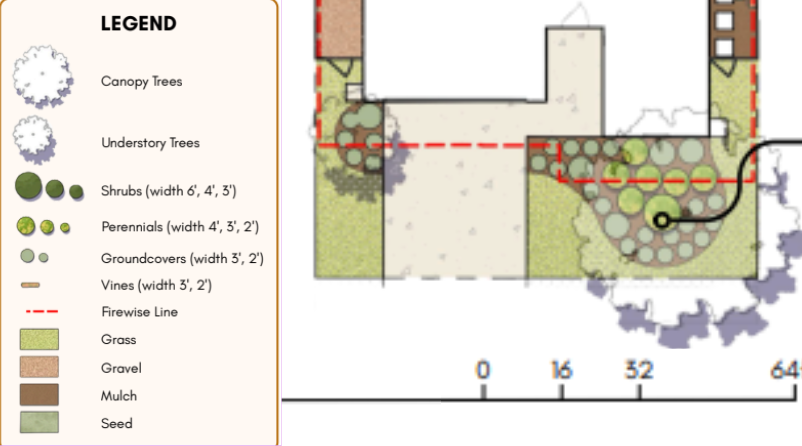
This template shows how to reduce your front lawn to a tidy border, expanding your front flower bed into a pocket pollinator garden. It follows basic design principles to make the garden appealing from the street, using larger shrubs at the back of the garden near the house, midsize shrubs and perennials as you move out, and low growing groundcover perennials at the border of the bed. A canopy shade tree shelters the house at a safe distance from the foundation, and surrounding the trunk and critical root zone of the tree with native plants removes maintenance concerns like keeping grass off of the trunk, piling too much mulch against the tree, or weed whackers bouncing off the tree’s trunk.
Depending on your plant choices and your maintenance style, using these templates can result in anything from a formal, tidy garden to a buzzing, whimsical cottage style garden and anything in between.
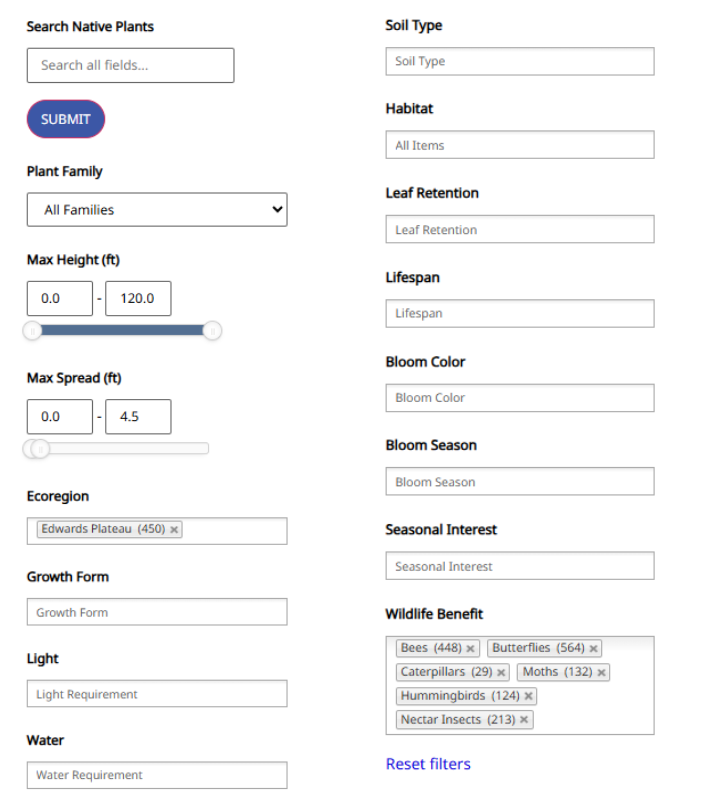
The designers suggest using the Native Plant Society’s Plant Database to create a shopping list of trees, shrubs, and perennials. For the hardcore DIYer or plant enthusiast, this is a really fun tool. Just choose your ecoregion (probably either Edward’s Plateau or Texas Blackland Prairie) and play with the filters, and dive in!
But maybe you just want to come in and shop?
To help make these templates as useable as possible, I’ve put together lists of plants that we regularly carry for you to plug into these templates!
Canopy trees, largest to smallest: Cedar Elm, Burr Oak, Shumard Oak, Chinquapin Oak, Live Oak, Buckley’s Red Oak, Monterrey Oak, Lacey Oak
Understory trees and freestanding smaller trees (10-25’): Mexican Plum, Eve’s Necklace, Texas Mountain Laurel, Texas Persimmon, Desert Willow, Texas Kidneywood, Anacacho Orchid, Palo Verde, Texas Redbud, Yaupon Holly, Possumhaw, Carolina Cherry Laurel, Wax Myrtle, Goldenball Leadtree, Mexican Buckeye, Bigtooth Maple, Flameleaf Sumac. Some high-value wildlife trees, like Wafer Ash, Rusty Blackhaw Viburnum, Carolina Buckthorn, and Evergreen Sumac, can be hard to find commercially but are beautiful plants with great benefits for pollinators and the ecosystems they support!
Shrubs: Flame Acanthus, Texas Sage (available in varieties of several sizes), dwarf yaupon holly, dwarf wax myrtle, fragrant white mistflower (aka shrubby boneset), skeletonleaf goldeneye, zexmenia, salvia greggii, beautyberry, coralberry, agarita, Texas rock rose. You can also use large bunch grasses like big muhly and little bluestem, or yuccas and agaves, to add structure to your garden where you might otherwise use a shrub.
Native perennials for the pollinator garden: This list could get out of control quickly, and really merits its own blog post. In the meantime, here are some resources to help you compile your wishlist.
Xerces Society's Native Plants for Pollinators and Beneficial Insects: Southern Plains Region
Ladybird Johnson Wildflower Center's Hummingbird Plants for Central Texas
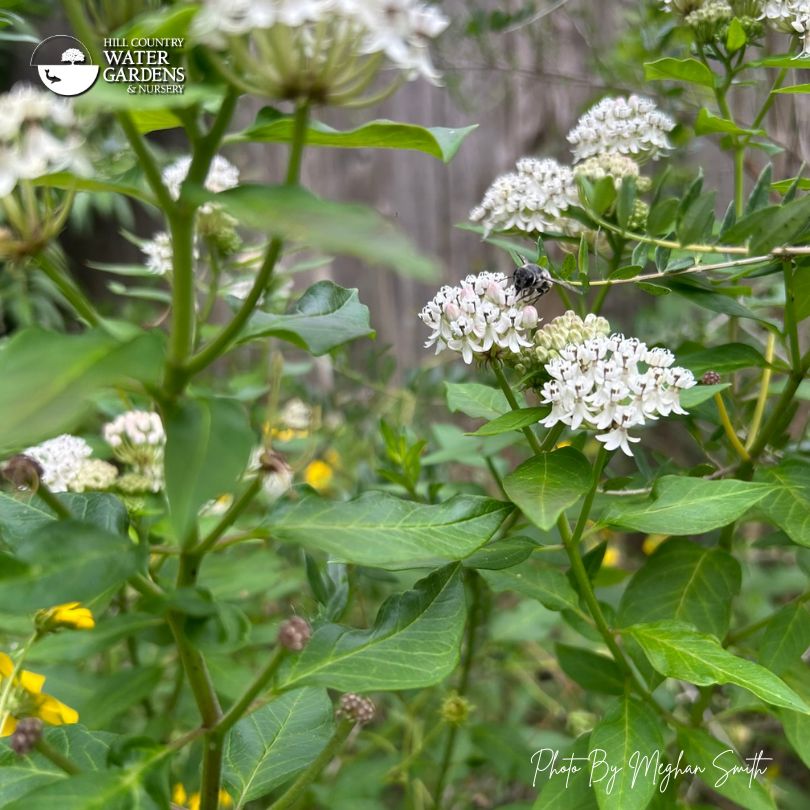
Spreading groundcovers we love that support lots of pollinators: Yarrow, frogfruit, snakeherb, lyreleaf sage, winecup, horseherb, silver ponyfoot, wooly stemodia, missouri violet, Gregg's blue mistflower
Remember, these lists aren't meant to give every option. Still, I hope you feel inspired and confident about creating your own beautiful, native pollinator paradise! If you're still feeling overwhelmed, you can always bring these templates, your measurements, and your ideas in and ask for help. All of our nursery specialists know more about what grows in Central Texas than AI (so far).
About the author: Meghan Smith is a nursery specialist and native plant enthusiast at Hill Country Water Gardens. She really does not like AI, and did not use it to write this article. Off the clock, you can find her wandering in the woods with her dog or volunteering somewhere wild and green.
